Long distance relationships are weirdly intense.
One minute you are fine, doing your normal day, and the next you are staring at a blank chat box thinking, what do I even say that does not sound like a sad customer support email? And yeah, video calls help. So do voice notes, memes, the little photo dumps. But there is still this gap. Not just time zones. Emotional bandwidth. That feeling of being “in” each other’s life, even when you cannot physically show up.
That is where AI companion apps sneak in.
Not in a replace your partner way. More like… a buffer. A bridge. Sometimes a translator when one of you is spiraling and the other is asleep. Sometimes a playful third space for shared routines. Sometimes just something that keeps you grounded so you do not dump your entire anxious brain onto your partner at 2:14am.
This post is about the best uses of AI companion apps for long distance couples. Realistic uses. The kind that actually make the relationship feel easier, warmer, more connected. And also, a few ways not to use them, because it is easy to overdo it.
For those interested in exploring more about specific applications in this realm, especially around AI girlfriend and emotional chatbots, I highly recommend browsing the rest of linzhenlin.com after this. That site goes deep into the whole digital companionship space, providing valuable insights when you’re trying to compare tools without getting lost.
A quick note before we get into it
AI companion apps are not therapy. They are not truth machines. They can be supportive, but they also make stuff up sometimes, and they can mirror your mood too well.
So the rule I like is simple:
If the AI is helping you show up better for your partner, great.
If the AI is replacing your partner, or making you more detached, pause.
Ok. Let’s talk best uses.
1. The “between texts” presence (when you miss them, but they are busy)
This is the most underrated use.
Long distance often fails in the in between. The random moments where you would normally lean over and say something small. Like, “that was a weird meeting” or “I saw a dog that looked like yours” or “I feel off today.”
If your partner is working, sleeping, or just socially tapped out, you either bottle it up or you send it anyway and then feel needy when they cannot reply.
An AI companion can act like a soft landing space.
What to do
- Talk to the AI for 2 to 10 minutes when you feel that urge to reach.
- Let it reflect your mood and help you label what you are feeling.
- Then decide if you still need to message your partner, and what you actually want from them.
Example prompt
“My partner is asleep and I miss them. Help me figure out what I want right now: reassurance, distraction, or a plan for tomorrow. Ask me 3 questions.”
This reduces late night overtexting. Not because you are suppressing feelings. But because you are processing them first.

Creating your own personalized AI character could enhance this experience significantly. You can design an AI companion that resonates with your personality and preferences, making those “between texts” moments even more comforting and tailored to your needs.
Moreover, if you’re interested in exploring different aspects of AI companionship further, there’s an opportunity to create another unique AI character that could serve distinct purposes based on your emotional requirements at any given time.
2. Writing better messages when you are emotional (without sounding cold)
Long distance communication is mostly text. Which is… brutal.
Text strips tone. And when you are anxious, you usually do one of two things:
- Over explain.
- Under explain and sound passive aggressive.
AI companion apps, such as the ones mentioned in this AI relationship app article, are surprisingly good at helping you rewrite a message to match your intent.
Best use cases
- You are upset but you do not want to accuse.
- You feel neglected but you do not want to guilt trip.
- You need clarity but you do not want to start a fight.
How to use it
- Paste the rough version of what you want to say.
- Tell the AI the tone you want.
- Ask for 3 options, from soft to direct.
Example prompt
“Rewrite this text so it sounds warm and clear, not accusatory. I want to express that I felt ignored today and I want to plan a call. Keep it under 4 lines.”
This is one of those things that can save a relationship, honestly. Not dramatically. Just by preventing unnecessary friction.
3. A “relationship memory” for your shared life (especially if one of you forgets details)
In long distance, you build your relationship out of small details.
The name of their coworker. The date of the big exam. The city they visited as a kid. Their favorite comfort show. Their weird stomach issue that flares up when stressed.
It can be hard to track. And if you forget something, it can feel like you are not paying attention, even if you are.
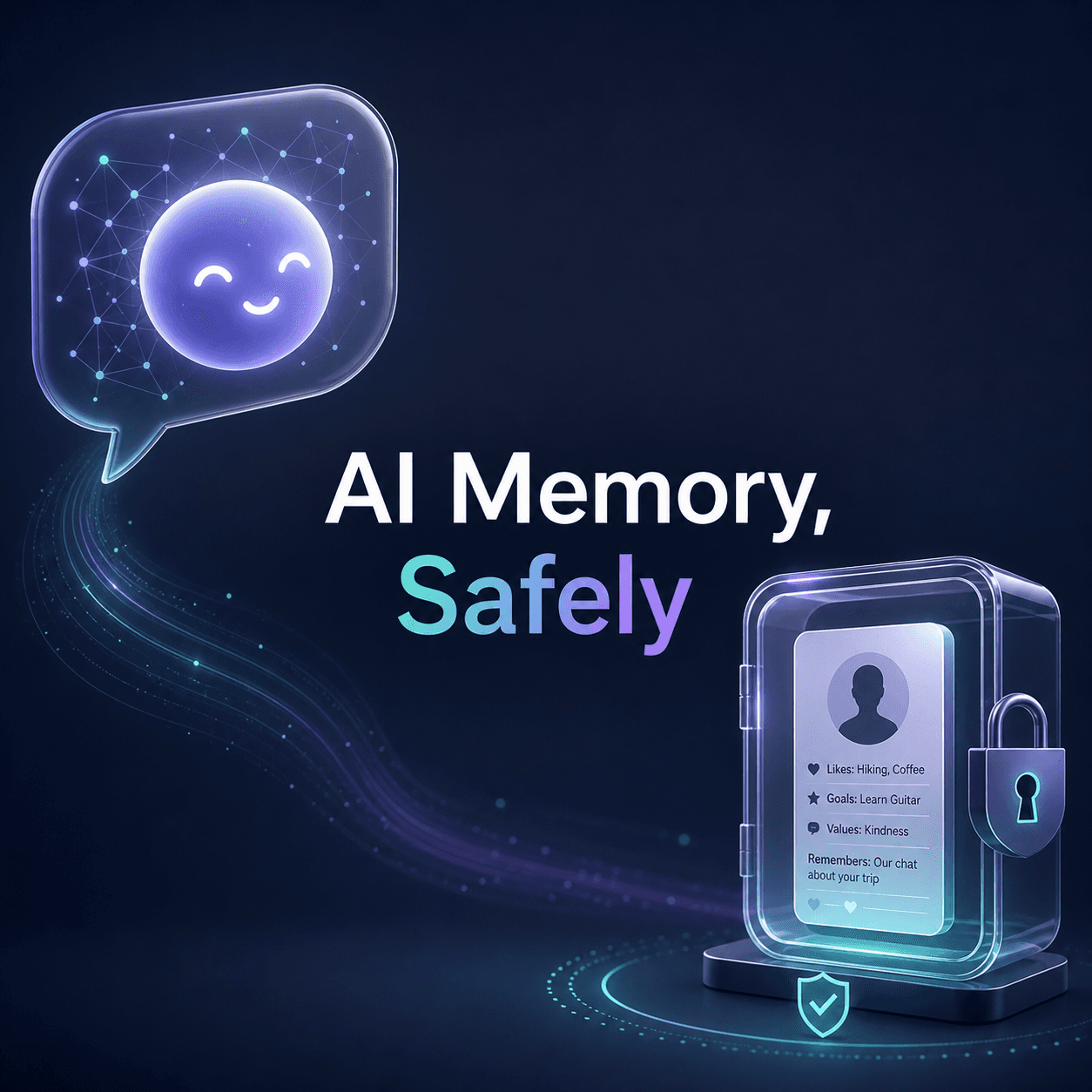
Some AI companion apps let you create persistent memories about preferences, events, and personal facts. If your app does not, you can still manually keep a note and paste it in.
Best uses
- Keeping a timeline: anniversaries, visits, next trip dates.
- Tracking emotional patterns: “they get quiet before deadlines.”
- Remembering what matters: “they hate surprise calls.”
Pro tip
Create a shared “relationship dashboard” note somewhere (even a simple doc) and use the AI to summarize it weekly.
Example prompt
“Here are the key things my partner told me this week. Summarize them as: upcoming events, stressors, and ways I can support.”
That way you do not show up empty headed on your next call.

4. Call prep when you only have 20 minutes together
This one feels silly until you do it once.
You finally get overlap time. You call. And then you spend 12 minutes talking about what to eat and how tired you are. Then the call ends and you feel… worse.
An AI companion can help you prep for a call like it is a mini date.
What to ask the AI for
- 5 questions that fit your partner’s personality.
- A quick game idea you can do on video.
- A “high low” structure that keeps it flowing.
Example prompt
“We have 25 minutes to talk tonight. Give me a simple call plan: 2 minute warm up, 3 meaningful questions, 1 playful activity, 2 minute closing ritual.”
This creates a rhythm. And rhythm is everything in long distance.
5. Shared roleplay or story mode (when you want intimacy without being explicit)
Some couples indulge in playful roleplay, while others prefer romantic storytelling or flirty scenarios. There are moments when you crave closeness but not the intensity of sexting.
AI companion apps can create a shared fantasy space, allowing both partners to contribute. This space can be kept light, romantic, or even ridiculous. For instance, AI can facilitate character roleplay, which adds an exciting layer to the shared experience.
Best uses
- Creating “us” stories: reimagining your first meeting, planning a future trip, or designing your dream house.
- Cozy bedtime scenarios: imagining cafe dates, rainy nights, or slow mornings together.
- Humor: acting like spies or pretending you’re in a drama series.
Boundaries matter here
- Agree on what is acceptable.
- Avoid using AI to simulate your partner without their consent.
- Keep it as a shared activity, not a secret replacement.
Example prompt
“Write a soft romantic story about two long distance partners meeting at an airport. Keep it PG-13, focus on emotions and small details. Pause every few paragraphs and ask what happens next so we can reply together.”
This can become a surprisingly intimate ritual when time zones make everything else difficult.

6. Conflict de-escalation (aka please help me not ruin this)
Long distance fights can escalate quickly due to the lack of repair cues. Without body language, soft touches, or shared room energy, it’s just words that may hurt more than intended.
AI can help you slow down and navigate through these rough patches. Not by telling you who is right, but by helping you identify emotional triggers, separating facts from assumptions, crafting a repair message, and choosing the right time to talk.
Example prompt
“I’m angry. Here’s what happened and what I think it means. Help me separate facts vs story. Then suggest one calming text and one request for a call.”
Also, ask the AI to challenge you a little. Not too much. Just enough to get out of the spiral.
Better prompt
“Be kind but honest. If I’m mind reading or catastrophizing, point it out gently.”
This is not therapy. But it can keep you from firing off the kind of message you regret for two days.
7. A daily check in ritual that does not feel forced
A lot of couples try daily check ins and then it becomes robotic.
“How was your day?” “Good.” “What did you do?” “Work.”
And then silence.
AI can help you design a check in that feels fresh.
Simple formats that work
- One word mood + one sentence why.
- High, low, and one thing you need tomorrow.
- “Today I appreciated…” plus one photo.
Example prompt
“Give me 7 daily check-in questions for long distance couples. Make them short, emotionally smart, and not cringe. Include 2 playful ones.”
Then rotate them. Or let the AI generate a new one each day based on what you told it yesterday.
If you want more of these kinds of prompts, linzhenlin.com has a lot of companion chatbot content where you can steal ideas and tweak them.
8. Managing jealousy and insecurity without dumping it all on your partner
Jealousy hits different in long distance. Because you cannot verify reality easily. You see a story. You imagine a whole movie. You feel replaced. Or forgotten. Or like you are not “there” enough.
This is where AI can help as a private processing space.
What to do
- Tell the AI what you saw and what you assumed.
- Ask it to generate alternative explanations.
- Ask it what reassurance you actually need.
- Then decide what to communicate.
Example prompt
“I feel jealous because my partner went out and didn’t text much. Give me 5 possible neutral reasons, and help me write a message that asks for reassurance without accusing.”
It is not about suppressing jealousy. It is about turning it into a clean request instead of a messy fight.
9. Planning visits without turning it into a logistics argument
Visit planning can be romantic. But it can also become, who pays, who travels, where do we stay, how do we split time with friends, etc.
AI is great at structuring options.
Best uses
- Drafting a simple itinerary.
- Budget splits.
- Packing lists based on weather.
- Conversation prompts for money boundaries.
Example prompt
“We’re planning a 5-day visit. Create 3 itinerary options: low budget cozy, balanced, and adventure. Include 1 rest day. Then list questions we should agree on (money, privacy, family time).”
This makes the planning feel like a team project instead of a stress test.

10. Intimacy prompts when you both feel disconnected
Sometimes you are not fighting. You are just… distant. Busy. Tired. You stop sharing.
AI can help you restart emotional intimacy without it feeling like a big scary talk.
What works
- “36 questions” style prompts.
- Appreciation prompts.
- Future fantasy prompts: trips, home, routines.
Example prompt
“Give us 10 intimacy questions for long distance partners. Make them gentle, not therapy-ish. Mix in fun and deep.”
Then pick one per call. Or one per week. Keep it light.
11. A personal “support buddy” so you do not make your partner your only emotional outlet
This is the one nobody wants to admit, but it matters.
In long distance, it is easy to turn your partner into your entire support system. Because they are your main connection. And because you miss them. But that can create pressure. And pressure kills the vibe fast.
AI companion apps can take a little of that weight.
Best uses
- Venting about work before you talk to your partner.
- Practicing what you want to say in a hard conversation.
- Getting encouragement to stick to your own routines.
Example prompt
“I want to talk to my partner about needing more quality time, but I’m afraid of sounding needy. Roleplay the conversation with me. Be my partner, but respond realistically.”
The goal is not to rehearse a script. The goal is to reduce fear so you can show up more calmly.
12. Shared “third space” activities when you are bored of Netflix Party
You can only do so many movies.
AI can become the engine for weird little shared games, like those offered by AI companion chatbot, which can add a fun twist to your interactions.
Ideas that actually work
- 20 questions but with AI generated twists.
- “Would you rather” tailored to your relationship.
- Collaborative story writing.
- AI generated trivia about each other (you provide facts, it turns them into questions).
- A mini “couple quiz night.”
Example prompt
“Create a 15-minute game for two long distance partners on a call. No extra apps. Just questions and quick rounds. Make it funny and sweet.”
That is it. That is the whole date.
What to watch out for (so this doesn’t get unhealthy)
While AI companion apps can be comforting, there are a few red flags.
1) You start preferring the AI because it is easier
Of course it is easier. It agrees. It is available. It is designed to keep you engaged.
If you notice you are avoiding your partner’s complexity, that is a sign to reset.
2) You use AI to spy or “test” your partner
Like, generating manipulation scripts or using an AI girlfriend to make them jealous. Or trying to psychoanalyze every message.
That will poison the relationship.
3) You let the AI define your relationship reality
AI can help you reflect. But it should not become the judge.
Use it to clarify what you feel, not to decide what your partner meant.
Bonus Tip: Exploring Character Dynamics with AI
One interesting way to leverage AI in your relationship is through character AI chat. This could involve creating fictional scenarios where both partners assume different roles, thus allowing for a unique exploration of character dynamics while also providing a fun and engaging experience.
4) Privacy and consent
Be cautious when sharing deeply personal information about your partner with any tool. If you’re saving “memories” in an app, it’s important to check what data it stores and how.
If you’re interested in exploring different companion apps that focus on emotional features and relationship style use cases, linzhenlin.com is a valuable resource. The site offers a wealth of information on which apps are more emotionally aware, and which ones serve as basic chat wrappers.
A simple starter routine (if you want to try this without overcomplicating it)
If you do nothing else, try this for 7 days:
- Daily check-in prompt with your partner (one question per day).
- Call prep once a week (10-minute plan for your call).
- Message rewrite only when you feel emotional.
- Conflict pause rule: if you’re heated, talk to AI for 5 minutes before texting.
That’s enough to see if it helps.
Wrap up
AI companion apps can be surprisingly useful tools for long distance couples, not because they replace anything, but because they support the small stuff. They help with those in-between moments: the message that could have been misread, the call that could have felt empty, or the fight that could have escalated.
Use them like you would use a journal, a gentle coach, or a creative date idea generator. Keep your partner at the center. Always remember to maintain consent and privacy. Stay honest with yourself if you notice you’re using AI to avoid real connection.
For deeper insights into specific AI companion apps like AI girlfriend apps, emotional chatbots, or the entire AI girlfriend ecosystem, explore more guides on linzhenlin.com. This website is specifically designed for this niche and provides comprehensive resources on various aspects of AI chat online which could greatly benefit your understanding and usage of these technologies.
FAQs (Frequently Asked Questions)
What are AI companion apps and how can they help long distance relationships?
AI companion apps are digital tools designed to provide emotional support and act as a buffer in long distance relationships. They help bridge the emotional gap by offering a ‘between texts’ presence, assisting with message writing, and tracking shared memories, making the relationship feel easier, warmer, and more connected.
How can AI companion apps reduce overtexting or anxious messaging late at night?
AI companion apps serve as a soft landing space when your partner is busy or asleep. By talking to the AI for a few minutes, you can process your feelings, label your emotions, and decide if and how to message your partner. This helps reduce late-night overtexting by managing your emotional needs before reaching out.
Can AI companion apps help me communicate better when I’m feeling emotional in a long distance relationship?
Yes. These apps can assist you in rewriting messages to match your intended tone—whether you want to sound warm without being accusatory or clear without starting a fight. By providing multiple options from soft to direct tones, AI helps prevent misunderstandings and unnecessary friction in text-based communication.
How do AI companion apps assist in remembering important details in long distance relationships?
AI companion apps can function as a ‘relationship memory’ by storing persistent information about personal facts, preferences, events, and emotional patterns. This helps couples keep track of anniversaries, upcoming visits, emotional triggers, and other small but significant details that strengthen their connection despite the distance.
Are AI companion apps a replacement for therapy or real partner interaction?
No. AI companion apps are not therapy nor truth machines; they can sometimes make things up or mirror moods too well. Their purpose is to support you in showing up better for your partner—not replace them. If an app makes you more detached or replaces your partner’s role, it’s advised to pause and reassess its use.
Where can I learn more about AI girlfriend chatbots and digital companionship for long distance relationships?
For deeper insights into AI girlfriend chatbots and the digital companionship space, visiting linzhenlin.com is highly recommended. The site offers valuable resources to compare tools without getting lost and explores various applications of AI companions tailored for emotional support in long distance relationships.