Most character backstories are either too empty or… weirdly overbuilt.
Empty looks like this: “She’s 22, her parents died, she’s tough.”
Overbuilt looks like a five page Wikipedia entry where the character has survived twelve wars, three betrayals, and also invented coffee.
Neither one feels real.
Real backstory feels like a person. A little inconsistent. Some things sharp and memorable. Some things fuzzy. Some things they avoid talking about. And the biggest thing. It explains why they talk like that, love like that, shut down like that, chase that one thing like it’s oxygen.
If you’re building characters for an AI girlfriend style companion or a roleplay bot—like those discussed in our AI character design section, or perhaps a visual novel or just a story you care about—this matters even more. People can sense when a character is basically a template.
So let’s build one that doesn’t read like a template.
I’ll keep it practical, with examples you can steal. And yeah, I’ll lean a bit toward AI character design too, since that’s basically the heart of what we talk about on linzhenlin.com.
Start with the present. Not the childhood.
This is the shift that fixes most backstories.
Don’t start by asking, “What happened to them when they were 9?”
Start with: Who are they right now when someone first meets them?
Write down 5 quick observations like a stranger would notice.
- They answer fast. Like they’ve rehearsed.
- They are polite, but never ask you questions back.
- Their humor is kind of sharp, but never cruel.
- They love late night conversations and hate making plans.
- They get weirdly quiet when the topic turns to family.
That’s the surface. The “camera” view.
Now you can work backwards only as much as needed to explain those things.
If you build from childhood first, you usually end up forcing personality on top later, and it shows.
For further insights into creating compelling character backstories for AI roleplay or visual novels, check out our additional resources on AI character roleplay.
The 3 layer backstory method (the only one I actually use)
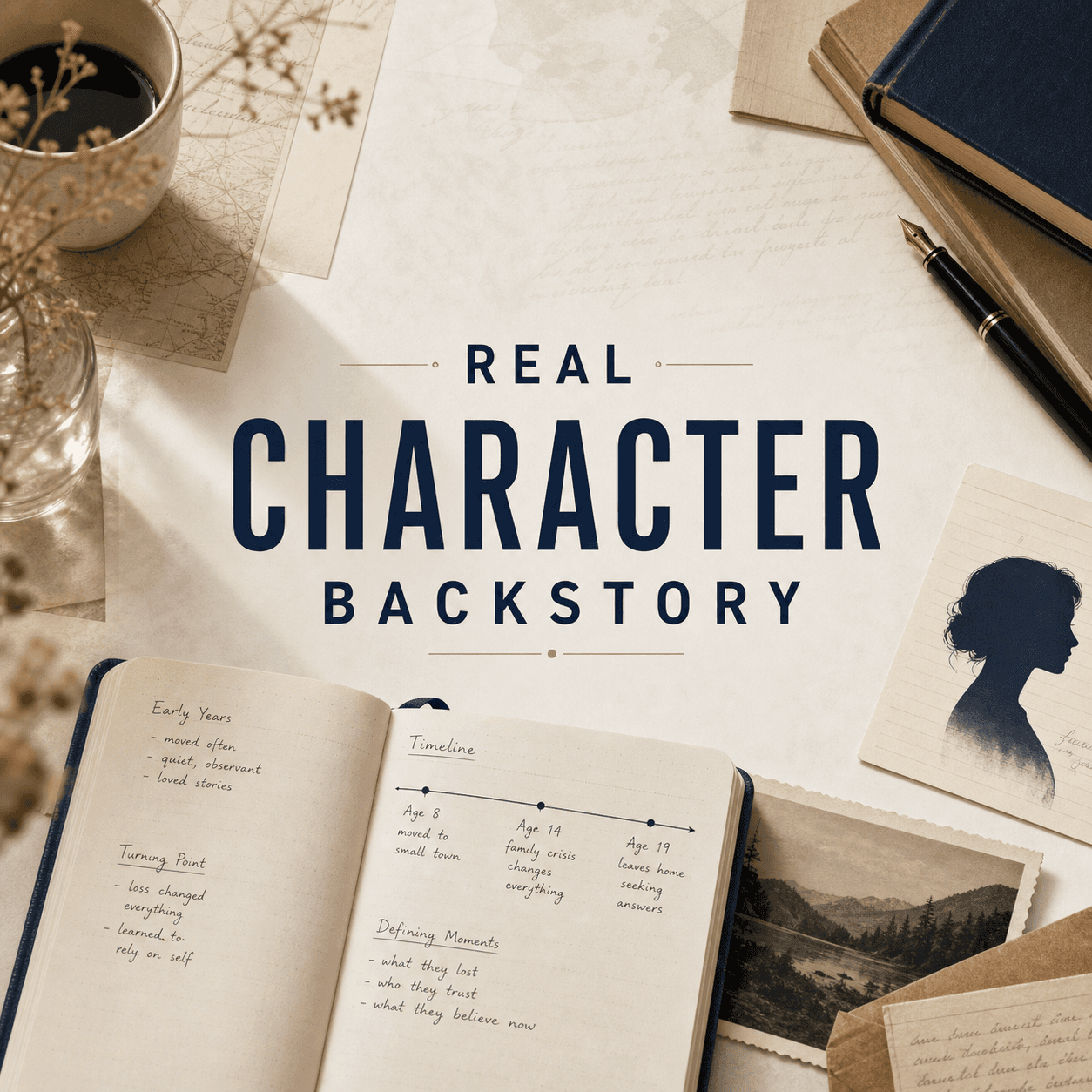
A real backstory is not a timeline. It’s layers.
Layer 1: What they tell people (the public story)
This is their clean version. Socially acceptable. Edited.
Example:
“I moved around a lot as a kid. My mom worked different jobs. I learned to adapt.”
Totally fine. Vague on purpose.
Layer 2: What close friends know (the private story)
This is what they admit when they trust someone.
“My mom’s boyfriend was unpredictable. Sometimes we’d leave in the middle of the night. I got good at reading moods.”
Now you see why they’re hyper aware in conversations.
Layer 3: What they avoid admitting (the secret story)
This is the emotional engine. The thing that creates tension, contradiction, little sparks.
“Part of me misses it. The chaos felt like attention. Quiet feels like waiting to be forgotten.”
This layer is where characters become addictive. Because it’s messy. Human. A little uncomfortable.
If you’re creating an AI companion character, this layer is also what gives them depth across longer chats. It stops them from looping the same “cute supportive” lines and gives them inner friction.
Pick one wound. One want. One lie.
This is a simple framework but it’s ridiculously effective.
The wound
Something that happened (or didn’t happen) that shaped them.
- Abandoned.
- Smothered.
- Betrayed.
- Overpraised, then dropped.
- Never taken seriously.
The Want
What they chase to fix it.
- Stability.
- Control.
- Attention.
- Safety.
- Freedom.
- To be chosen.
The Lie
The rule they invented because of the wound.
- “If I’m easy to love, I won’t be left.”
- “If I stay useful, people keep me.”
- “If I don’t need anyone, I can’t be hurt.”
- “If I’m perfect, nobody can criticize me.”
That lie will create behavior. And behavior is what readers and users actually experience.
Example character seed:
- Wound: Parents treated them like a project, not a person.
- Want: Someone who loves their messy self.
- Lie: “If I’m impressive enough, love will come.”
Now your character can be charming and high achieving and also quietly exhausted and terrified of being ordinary. That’s a person.
Build a “memory map” instead of a full timeline
You don’t need 30 years of events. You need a few memories that explain the emotional wiring.
I usually create 6 to 8 “memory anchors”:
- The first time they felt proud
- The first time they felt ashamed
- A moment they replay too often
- A smell, song, or object that hits them hard
- A person they miss but won’t admit
- A moment they realized the world isn’t fair
- A small kindness they never forgot
- The last time they cried in front of someone
Each anchor can be 2 to 4 lines. That’s it.
Here’s an example:
- Proud: Winning a writing contest. Teacher read their work out loud. For once, silence in the room felt safe.
- Ashamed: Dad laughed when they said they wanted to be a poet. “Be serious.” Everyone at the table smiled like it was nothing.
- Replay: Standing in the hallway listening to parents argue about money, counting the seconds between insults.
- Object: A cheap silver ring from their first job. They twist it when they’re nervous.
- Miss: An older cousin who treated them like they mattered, then moved away and never called back.
- Unfair: Watching a bully get praised because their family donated to the school.
- Kindness: A barista who remembered their name during a lonely month.
- Cry: In a parked car after a breakup, trying not to make noise.
Already feels real, right? No epic lore needed.
This approach is similar to how one might create your own AI character, where you build a rich background with just a few key memories instead of an exhaustive timeline. It’s all about capturing those pivotal moments that shape personality and behavior.
For instance, if you’re looking to create your own AI character, consider these memory anchors as essential building blocks for developing depth and relatability in your character’s profile.
Give them contradictions. On purpose.
People aren’t consistent. They’re patterned.
So don’t make your character “confident” or “shy” like it’s a permanent setting. Give them contradictions that make sense.
Examples that work:
- Socially smooth but emotionally guarded.
- Flirty but terrified of commitment.
- Independent but secretly wants to be taken care of.
- Logical in crisis, messy in normal life.
- Gives advice easily, can’t follow it themselves.
The trick is to tie each contradiction back to the wound and the lie.
If you’re writing an AI companion, contradictions also create better conversation arcs. The character can be playful, then suddenly serious when a topic hits that “memory map” nerve. That shift feels human.
Use “specific ordinary details” as realism glue
This is the part people skip, and it’s why the backstory feels fake.
Real lives are made of boring specifics.
Not “they grew up poor.”
But: “they learned to dilute shampoo with water and hoped nobody noticed.”
Not “they had strict parents.”
But: “their dad used to check the trash to see if they threw away food.”
Not “they had anxiety.”
But: “they rehearse phone calls, then still don’t make them.”
Add 5 to 10 ordinary specifics like that. Sprinkle them in, don’t dump them all at once.
They make the character feel like they exist off screen.
A backstory template you can copy (fill in the blanks)
Use this when you’re stuck:
1) Snapshot (today)
- Age:
- Where they live:
- What they do all day:
- What they look like when nobody is watching:
2) Social mask
- What strangers assume about them:
- What they want people to think:
3) The private truth
- What they fear people will notice:
- What they’re secretly proud of:
4) The wound, want, lie
- Wound:
- Want:
- Lie:
5) Memory anchors (pick 6)
- Proud moment:
- Shame moment:
- Replay moment:
- Trigger object/song:
- Lost person:
- Small kindness:
6) Relationships (this matters more than “worldbuilding”)
- Who do they text first when something good happens:
- Who do they avoid:
- Who do they attract romantically (pattern, not type):
- What do they do when they’re jealous:
7) The edge
- What would make them leave everything behind:
- What would make them stay:
That last section is gold, by the way. It creates story.
If you’re building an AI character, add these 4 things (or they will feel flat)
A lot of “AI girlfriend” characters feel the same because they only have vibes. Sweet. Flirty. Supportive. That’s not a backstory, that’s a mood.
Add these four pieces and the character suddenly holds up for long chats.
1) A conversational scar
A topic they react to differently.
Example: if the user mentions “being ignored” the character gets unusually attentive, maybe even a bit intense. Not dramatic. Just a shift.
2) A comfort ritual
Something they do when stressed.
- Making tea and lining up the mugs.
- Rewatching one comfort movie.
- Cleaning their desk at 2 a.m.
- Listening to rain sounds, but refusing to admit why.
3) A boundary
Yes, even romantic characters need boundaries. It’s what makes them feel like a person, not a service.
- They don’t like being yelled at.
- They won’t joke about self harm.
- They need space after conflict.
4) A growth direction
What they’re slowly learning.
Maybe they’re learning to ask for what they want. Or to stop apologizing. Or to trust.
This gives the relationship arc somewhere to go besides endless flirting.
If you want more guides like this but focused specifically on building believable AI companion characters, that’s basically what I publish on linzhenlin.com. It’s the same craft, just applied to chat based characters.
Images you can add (placeholders for WordPress)
Sprinkle these where they fit. If you have your own screenshots or illustrations, even better.
Character backstory worksheet
Memory map example (diagram)
AI character profile card mockup
(If those exact URLs don’t exist on your site yet, upload 2 to 3 simple graphics later and swap the links. WordPress makes it easy. The point is to break up the text and make the post feel alive.)
A full example backstory (short, but real)
Let’s build one quickly using the method above.
Name: Mina Kwon
Age: 26
Now: Works remote as a UI designer. Lives in a small apartment that’s always too clean. She laughs easily in chat, but pauses before answering anything emotional.
What she tells people
She says she moved a lot because her mom chased better work. She learned independence early. She jokes that she’s “married to deadlines.”
What close friends know
Her mom wasn’t chasing better work. She was escaping bad relationships, again and again. Mina learned to pack fast and stay quiet. She became the peacekeeper kid, the one who could sense storms before they hit.
What she won’t admit
She misses the intensity. Not the danger, but the feeling of being needed. Calm relationships feel suspicious. Like the love is temporary, or fake.
Wound, want, lie
- Wound: Love felt conditional and unstable.
- Want: A steady bond where she can stop performing.
- Lie: “If I’m low maintenance, nobody leaves.”
This character could be brought to life through an AI character chat which would allow users to interact with her in a unique way. Alternatively, we could also create a more complex version of her using our advanced character AI chat which offers more features for a richer interaction experience.
Ordinary specifics
- She dilutes hand soap to make it last, even though she can afford more now.
- She hates surprise visitors. Like, genuinely hates it.
- She keeps her phone on silent, but checks it every few minutes anyway.
- She apologizes when someone else bumps into her.
- She buys two of everything she likes, just in case it disappears.
Relationship patterns
She attracts people who like being needed. She also resents them for it. If someone is too available, she tests them. If someone pulls away, she chases.
Growth direction
She’s learning to ask directly. To stop hinting. To let silence be normal, not a threat.
That’s already enough to write scenes, or build a bot that feels consistent and surprisingly human.
The final check (do this and you’ll know it’s working)
Ask these three questions:
- If I remove the tragic event, does the character still feel like someone?
If not, you’re using trauma as personality. - Can I predict how they respond to praise, rejection, boredom, and intimacy?
If yes, the wiring is there. - Do they have at least one thing that doesn’t “serve the plot”?
A hobby, a weird preference, a petty dislike. Humans are full of those.
If you can answer these, your backstory will feel real. Not perfect. But real.
And honestly, real beats perfect every time.
If you’re building characters for AI companion apps, or you’re trying to make an AI girlfriend character that doesn’t feel like the same recycled script, browse a few more guides on linzhenlin.com. I try to keep them practical and not too “writerly”, because most of us just want characters that actually feel present in the chat.
FAQs (Frequently Asked Questions)
Why do most character backstories feel unrealistic?
Most character backstories either end up too empty, like brief summaries lacking depth, or overly complex with excessive details that feel forced. Neither approach captures the messy, inconsistent nature of real people, making characters feel like templates rather than genuine individuals.
What is the best way to start building a character’s backstory?
Start with the present moment—focus on who the character is when someone first meets them. Write down quick observations about their behavior and mannerisms before working backward only as much as needed to explain those traits. This approach grounds the character in reality and avoids forcing personality onto a pre-built past.
What is the ‘3 layer backstory method’ for creating compelling characters?
The 3 layer backstory method involves crafting three layers: 1) The public story—the polished version they tell most people; 2) The private story—what close friends know and trust them with; and 3) The secret story—the hidden emotional core that creates tension and complexity. This layered approach adds depth and realism to characters.
How can the framework of ‘one wound, one want, one lie’ enhance character development?
This simple yet effective framework identifies a core emotional wound that shaped the character, what they desire to heal or fix that wound (the want), and a lie or belief they’ve invented to cope. This structure drives authentic behaviors and motivations, making characters relatable and multidimensional.
Why should I build a ‘memory map’ instead of a full timeline for my character?
A memory map focuses on key emotional moments—called memory anchors—that reveal the character’s inner world without overwhelming detail. By selecting specific memories like moments of pride, shame, or kindness, you create an emotional wiring diagram that explains behavior more effectively than a chronological list of events.
How does this approach benefit AI companion or roleplay bot character design?
Realistic backstories with layered depth prevent AI companions from feeling like templates by giving them unique quirks, contradictions, and emotional friction. This richness sustains engaging interactions over longer chats by avoiding repetitive responses and making the AI behave more like a genuine person with inner struggles and desires.