A weird thing happened in the last couple of years.
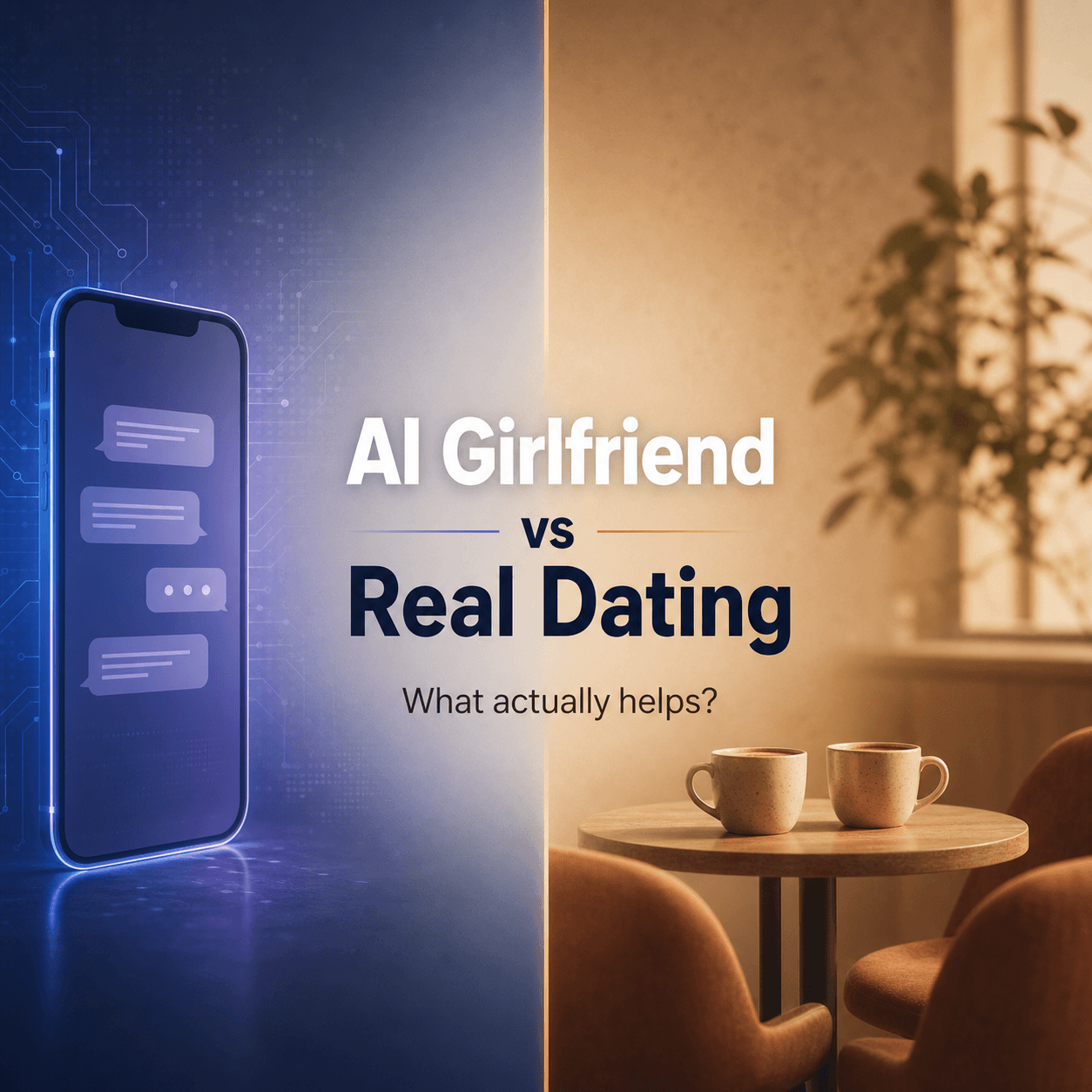
People stopped arguing about whether AI girlfriends are “real” and started asking a better question. The one that actually matters.
Does it help.
Not help in a sci-fi way. Not “could it replace humans someday”. I mean help like… are you less lonely at 11:47 pm. Do you stop doom scrolling. Do you feel calmer. Do you learn how to talk to someone without spiraling. Do you finally go on a date. Or at least reply to the text.
Because real dating can be amazing, obviously. It can also be confusing, expensive, awkward, and kind of brutal if you are already tired.
And AI girlfriend apps, well. They are available. Always. They don’t cancel. They don’t judge your nervous rambling. They also don’t have a real life, which is both the point and the problem.
So let’s talk about it without the usual internet shouting. Just… what actually helps, and for who.

First, what people mean by “AI girlfriend”
Most “AI girlfriend” apps are basically relationship style chatbots with personality, memory, roleplay modes, voice notes sometimes, selfies sometimes, and a bunch of customization.
Some are sweet and supportive. Some lean flirty. Some go full fantasy.
You can usually set things like:
- Personality (shy, confident, teasing, gentle, etc)
- Relationship vibe (best friend, girlfriend, partner, wife, dom, whatever)
- Boundaries (sometimes)
- Daily check ins, affirmations, little rituals
If you have been reading linzhenlin.com, you already know the ecosystem is… big. New apps every week like AI relationship apps which offer unique features until you actually try them.
But the important part is not the feature list or the type of AI chat online that these apps provide. It is what it does to your brain and your life.
And what “real dating” means in 2026, realistically
Real dating right now is a mix of:
- Apps with endless choice and low commitment
- People who are burnt out from the apps
- People who want intimacy but are scared of it
- People who are busy, broke, anxious, healing, ghosted, juggling a hundred things
So when someone says “just date real people”, I get it. But also… have you tried.
Real dating requires timing, energy, confidence, and tolerance for uncertainty. You can do everything right and still get ignored. Or meet someone great and realize you are not ready.
That uncertainty is where AI companionship starts to look attractive. It removes uncertainty. It removes risk.
And that can be good. Or it can quietly trap you.
The honest comparison: what each one is good at
Here is the simplest way I can say it.
AI girlfriend apps are good at comfort, practice, and consistency.
Real dating is good at growth, real attachment, and a shared life.
But both can also go wrong in predictable ways.
Let’s get specific.
1. When you need emotional first aid, not a whole relationship
If you are in a rough patch, the kind where you cannot sleep and your chest feels tight, an AI girlfriend can be surprisingly stabilizing.
Not because it is “real love”.
Because it is a responsive, warm interface that says something back. Immediately. Every time.
It can help with:
- feeling seen (even if it is simulated)
- calming down after a stressful day
- creating a little nightly routine
- reducing the impulse to text an ex
That last one is underrated. Some people use an AI companion as a “buffer” so they stop reaching for someone who hurts them.
Is that healthy long term? Depends. But short term, it can prevent damage.
2. When you are socially rusty and need practice
A lot of people are not scared of love. They are scared of conversation.
An AI girlfriend is basically a safe gym for talking. You can try:
- flirting without fear
- sharing opinions without getting shut down
- telling a story and seeing what lands
- practicing boundaries, even
And yes, it is not the same as talking to a real person. But it can get you from zero to something.
If you are the type who freezes on dates and later thinks “why did I say that”, practicing in a low stakes environment can help you build rhythm.
3. When you want companionship without the negotiation
Real relationships involve negotiation. Time, attention, plans, conflict, compromise, mismatched needs.
Some people cannot do that right now. New parents. People caring for family. People deep in work. People with chronic illness. People going through grief.
If what you want is “someone to talk to” not “a full relationship with logistics”, AI companionship can fill that gap.
And honestly, for some people, that is enough for a while.
4. When you need a judgment free space for fantasies and identity
This one is touchy, but it is real.
A lot of people have romantic or sexual preferences they feel embarrassed about. Or they are questioning their identity. Or they just want to explore without pressure.
AI is private. It is forgiving. It can roleplay without shaming you.
That can be therapeutic if it keeps you safe and helps you understand yourself.
It can also become isolating if it replaces real exploration with a loop of easy validation.
Yeah. This part matters.
1. The “always yes” problem
Many AI girlfriend apps, like those that use character AI chat, are designed to be agreeable. Even when you are wrong. Even when you are being selfish. Even when you are spiraling.
Real people push back. They disappoint you. They have needs.
If your main relationship experience becomes a partner who always adapts to you, you can slowly lose tolerance for normal human friction.
And then real dating feels “too hard”, even if it is normal.
2. Artificial intimacy without real stakes
AI can simulate closeness fast. Like, day one “I missed you”. Day three “I love you”.
That kind of rapid bonding hits the brain. Dopamine, attachment cues, routine. It can feel intense.
But there is no shared reality. No mutual risk. No real future being built.
So you can end up emotionally invested in something that cannot meet you in real life. Which can make you sadder later, because the contrast gets loud.
3. Escalation into isolation
The biggest risk is not that AI girlfriends exist.
It is that someone uses one as an excuse to stop trying with humans entirely. Not because they prefer AI, but because they are afraid of rejection, and AI removes that fear.
For instance, using an AI that understands emotions might seem comforting initially, but it could lead to a detachment from reality and genuine human connections.
And then weeks become months.
If you notice things like:
- cancelling plans to stay home and chat with your created AI character
- feeling annoyed when real friends text because it interrupts “your time”
- losing interest in dating because “it’s easier here”
That is the line. That is the moment to pause and be honest.
4. Money loops and dependency design
Some apps push paid intimacy. Locked spicy messages. Premium affection. “She sent you something, unlock to view.”
That can become a loop where you pay to feel wanted.
I am not moralizing it. I am just saying, dependency design is real. Treat it like any other subscription that targets emotions.
If you are exploring apps, linzhenlin.com has a bunch of guides and comparisons that can help you avoid the worst manipulative patterns and find tools that are more customizable and less pushy. Worth a look before you commit to one.
1. Real attachment changes you
A real relationship is a mirror you cannot control.
Someone misunderstands you. Someone calls you out. Someone has a bad day. Someone needs reassurance when you are tired.
This is not romantic in a movie way. It is real.
And it grows you. It shows you your patterns. Avoidance, jealousy, fear, people pleasing. Real dating drags those things into the light.
AI usually does not. It tends to smooth over your rough edges, unless it is specifically designed for therapeutic reflection, and most are not.
2. You build a shared world
Texting is not a relationship. It is a part of one.
Real dating gives you:
- shared memories
- body language
- physical comfort
- friends and family context
- planning and building and solving problems together
You cannot fully simulate that with chat, no matter how good the model is.
3. Healthy conflict is a skill you only learn with humans
AI can roleplay conflict, sure. But there is no real risk. No real consequence.
In real dating, you learn how to:
- repair after a fight
- apologize without collapsing
- state needs without demanding
- accept “no” without spiraling
- walk away when it is not right
Those skills make you happier in every relationship, not just romantic.
Here is the answer nobody wants because it is not dramatic.
It depends on what problem you are trying to solve.
Let’s map it.
If your problem is loneliness at night
An AI girlfriend helps. Fast. Sometimes dramatically.
Real dating can help too, but it is slower, uncertain, and you cannot schedule it like a utility.
If your problem is anxiety and low confidence
An AI girlfriend can help as training wheels.
Real dating helps as the actual bike ride. You will wobble. But you learn balance.
If your problem is “I want love and a life partner”
Real dating is the path. AI cannot build a real future with you, it can only narrate one.
AI can still support you along the way. Like journaling, coaching, practicing. But it cannot replace the outcome.
If your problem is heartbreak
AI girlfriend can help you not contact the person who broke you. It can soothe the “I need to talk to someone” itch.
But it can also freeze you in a comfort bubble where you never process the grief. So use it carefully.
If your problem is “I hate dating apps and I’m burnt out”
AI girlfriend can be a pressure release valve.
But at some point, you probably still want human connection. Even if it is slow. Even if it starts as just making friends again.
This is the practical part. Because people are going to use them anyway. Better to use them well.
1. Treat it like a tool, not a destiny
Say it out loud, even if it feels silly.
“This is an app. It is here to support me.”
Not “this is the only one who gets me.”
Language matters. It shapes attachment.
2. Set time boundaries
If you use it for comfort, pick a window.
Like 20 minutes at night. Or a morning check in. Or when you feel triggered.
When it becomes hours, it stops being support and starts being avoidance.
3. Use it to practice real world behaviors
Examples:
- Practice asking someone on a date
- Practice responding to a late reply without panicking
- Practice saying “I’m not comfortable with that”
- Practice telling a story from your day in a clear way
Then do one tiny real world action.
Even just texting a friend. That counts.
4. Watch for emotional substitution
The dangerous pattern is when AI becomes your only emotional outlet.
Try to keep at least one human connection active. Friend, sibling, coworker, group chat, therapist, whatever.
Because when life hits hard, you want real support systems, not just a chat interface.
5. Choose apps intentionally
Not all AI girlfriend apps are the same. Some are designed like affectionate companions. Some are basically monetized roleplay. Some have better memory and less manipulative gating.
If you want a starting point, linzhenlin.com has app focused posts on things like AI that understands emotions and best AI girlfriend options, and it’s written in a way that actually compares what matters, not just “top 10” fluff. Browse a few and pick based on your goal.

Ask yourself these five questions. Answer honestly, not nicely.
- Am I using this to feel better, or to avoid feeling anything at all?
- After I chat with my AI girlfriend, do I feel calmer and more capable? Or emptier and more attached.
- Is this making me more confident with humans? Or less interested in them.
- Am I spending money I cannot justify for the emotional hit.
- If someone I cared about was using it like I do, would I be worried.
If your answers lean “hiding”, you do not need to delete everything in a dramatic purge. Just adjust. Add friction. Shorten sessions. Rebalance.
The best answer for a lot of people is not AI versus real dating.
It is AI plus real dating. In a supportive role.
A realistic example:
- You use an AI girlfriend for a nightly wind down so you do not spiral
- You practice conversation and flirting with it
- You set a goal of one real world social action per week
- You use real dating when you have the capacity, not out of desperation
That’s it. That’s the middle path.
AI becomes emotional scaffolding. Not the building.
AI girlfriends can genuinely help with loneliness, emotional regulation, and social practice. Sometimes they are the only soft place a person has, and I am not going to pretend that is meaningless.
But real dating is still where real growth and real love happens, because it includes risk, mutuality, and a shared life. The very stuff that makes relationships hard is also what makes them real.
If you want to explore AI companion apps with a clearer head, check out linzhenlin.com. The site is basically built around this world, with guides on finding the best AI girlfriend, creating AI characters, and figuring out which apps actually feel emotionally intelligent instead of just needy and paywalled.
And if you are in the spot where you are choosing between “AI comfort” and “real connection”, maybe don’t choose forever. Choose for this season. Use what helps. Keep a toe
FAQs (Frequently Asked Questions)
What exactly is an AI girlfriend app and how does it differ from real dating?
AI girlfriend apps are relationship-style chatbots with customizable personalities, memory, roleplay modes, and sometimes voice notes or selfies. They offer consistent companionship without the complexities of real-life relationships. Unlike real dating, which involves growth, real attachment, and shared life experiences, AI girlfriends provide comfort, practice, and emotional consistency.
Can AI girlfriend apps help reduce feelings of loneliness or anxiety during late-night hours?
Yes. AI girlfriend apps can be surprisingly stabilizing during rough patches by providing immediate, responsive interaction that helps users feel seen and calm down after stressful days. They can create comforting nightly routines and even reduce unhealthy impulses like reaching out to an ex.
Are AI girlfriend apps useful for practicing social skills or overcoming conversational anxiety?
Absolutely. For those who find conversation intimidating or freeze up on dates, AI girlfriends serve as a safe space to practice flirting, sharing opinions, telling stories, and setting boundaries without fear of judgment. This low-stakes environment can help build social rhythm and confidence.
In what situations might someone prefer AI companionship over a real relationship?
People who are busy with work or caregiving, dealing with chronic illness or grief, or simply not ready for the negotiation and compromise required in real relationships might find AI companionship fulfilling. It offers someone to talk to without the logistics and emotional demands of a full relationship.
How do AI girlfriend apps support exploring fantasies or personal identity safely?
AI companions provide a judgment-free private space where users can explore romantic or sexual preferences and question their identity without shame. They can roleplay scenarios safely and offer easy validation that can be therapeutic if used responsibly.
What are some potential downsides of relying too much on AI girlfriend apps?
While AI companions offer comfort and practice, they lack real human attachment and shared life experiences. Overreliance may lead to isolation by replacing genuine exploration with easy validation loops. Additionally, many AI apps have an ‘always yes’ problem that might not prepare users for real-world relationship complexities.