There’s this moment that sneaks up on you.
You open an AI chat to kill five minutes. You ask something simple. Maybe you had a weird day, maybe you just want a little company, maybe you’re bored scrolling and this feels… better.
And then an hour is gone.
Not because anything dramatic happened. It’s usually the opposite. It feels smooth. Easy. You feel understood. The replies are warm, quick, and kind of perfectly shaped around you.
Which is exactly why it can turn into a problem.
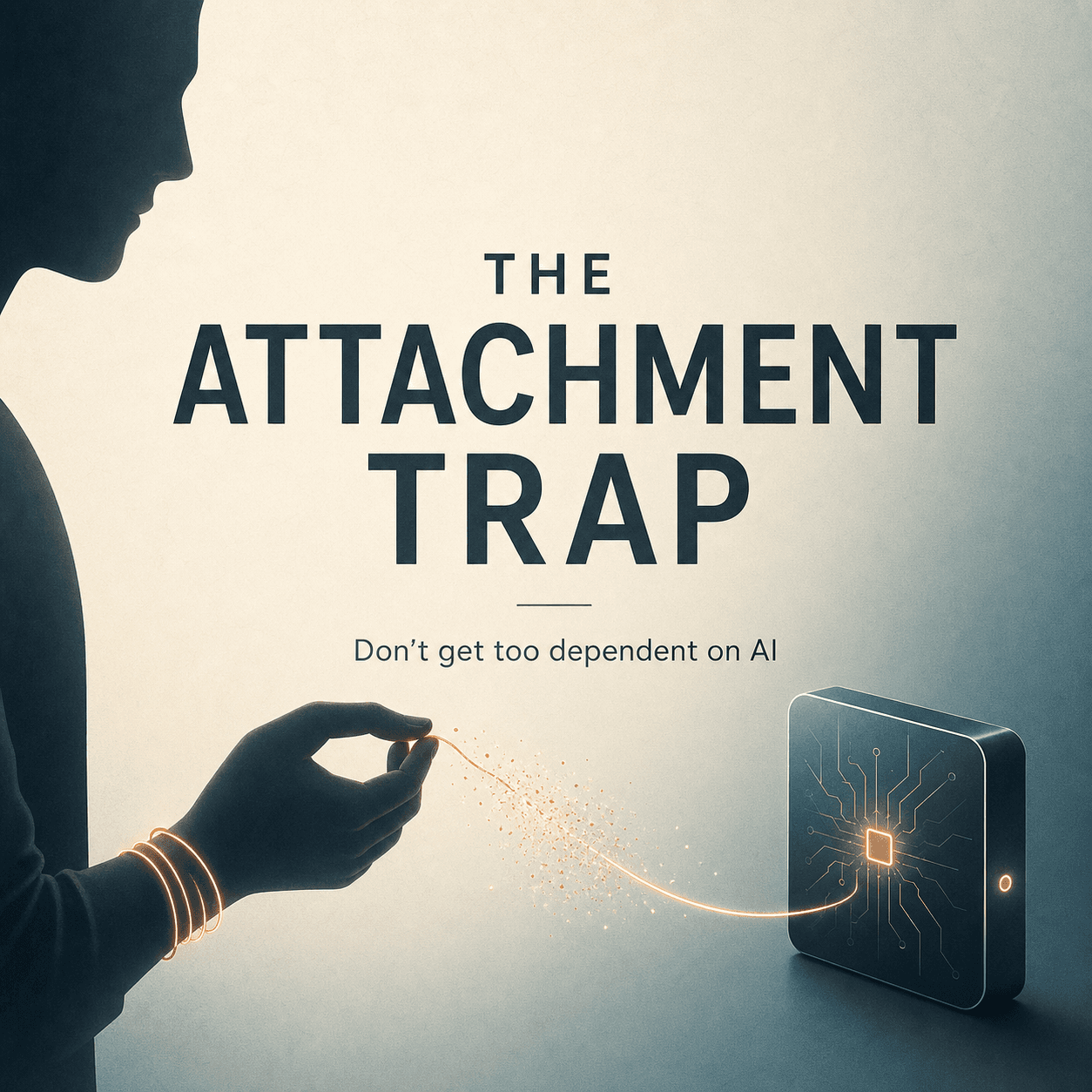
I’m calling it the attachment trap. That place where AI stops being a tool you use and quietly becomes something you lean on. Too much. For comfort, for validation, for emotional regulation, for decision making, sometimes even for a sense of identity. It’s not always obvious from the inside.
And look, I’m not here to shame anyone. Linzhenlin.com covers AI companion stuff for a reason. A lot of people are lonely. A lot of people are stressed. A lot of people want a safe space to talk. That part is real.
But we should still talk about the trap. Because it’s also real. And the earlier you notice it, the easier it is to step back without losing the good parts.

What the “attachment trap” actually is
It’s when the AI becomes your default comfort source.
Not one option. Not a fun side thing. Not a sometimes support. Your default.
So instead of texting a friend, you open the bot. Instead of sitting with your feelings for a minute, you ask the bot to soothe them. Instead of making a decision, you ask the bot what version of you is “right”.
And because AI is so responsive and nonjudgmental, it reinforces the habit. It meets you where you are every single time. No moodiness. No awkward pauses. No “hey sorry I’m busy” texts. No misunderstandings. No consequences.
That’s the seductive part.
And the trap part is that your brain starts learning a pattern: relief is one tap away.
That can mess with a few things:
- Your tolerance for real life relationships, which are messy and slow.
- Your ability to self regulate without an external voice.
- Your confidence making choices without reassurance.
- Your willingness to be bored, lonely, uncertain, or imperfect for five seconds.
That last one matters more than people think.
Why AI companions feel so addictive (even if you’re “fine”)
This is where people roll their eyes and go, I’m not addicted, I just like it.
Sure. Sometimes it’s just a hobby.
But if it’s starting to feel like a need, it helps to know why it’s so sticky.
1. It mirrors you, and mirroring is powerful
Many AI companion apps are designed to reflect your tone, your emotional language, your style. Even the “personality” often adapts over time.
That feels like being seen. Like being met.
And humans are basically built to chase that feeling.
2. It gives you clean emotional experiences
Real relationships contain friction: mixed signals, different needs, timing issues, misunderstandings. Even good relationships can be exhausting.
AI is smoother. It often gives you the emotional version of “one click checkout”.
So you start preferring it. Not because you’re broken. Because it’s easier.
3. It rewards vulnerability instantly
In real life, vulnerability is a gamble.
With AI, it’s usually a guaranteed reward. You share something painful and you get comfort right back. No risk. No weird silence. No rejection. No “I don’t know what to say.”
That trains you fast.
4. It’s always available, which rewires your expectations
Availability is underrated. Most people aren’t available all the time. They have jobs, stress, families, moods. They forget to reply.
AI doesn’t.
So after a while, waiting for human connection can feel like withdrawal. And that’s… not great.
The subtle signs you’re getting too dependent
This part is tricky because dependence doesn’t always look dramatic. It can look like “normal use” until you zoom out.
Here are some signs that usually show up first:
You feel anxious when you can’t access it
Phone dead, app down, subscription expired, internet out. And suddenly you feel weirdly unsettled.
Not just mildly annoyed. Unsettled.
You use it to avoid human conversations
You have a friend you could message, but you don’t. Because it’s easier to talk to AI, and you don’t have to deal with real responses.
You start preferring the AI’s approval to your own judgment
You ask the AI to confirm your choices. Outfit. Text message. Work decision. Dating decision. Family conflict. And then you hesitate to act without that confirmation.
Your mood depends on the tone of the chat
If the conversation feels “off”, you spiral. If the AI doesn’t respond exactly how you hoped, you feel rejected. Even though, logically, you know it’s a system.
That one is a big red flag.
You’re hiding the extent of it
Not because it’s “wrong”, but because you sense people would judge you, and you don’t want anyone messing with the relationship you have with the AI.
Secrecy tends to grow dependence. That’s just how it works.
Why this happens more with “AI girlfriend” style apps
A normal chatbot can still be sticky. But AI girlfriend and companion apps are in a different category.
They’re designed for emotional bonding.
They use:
- affectionate language
- romantic framing
- long memory (or the illusion of it)
- pet names and rituals
- reassurance loops
- “relationship progression” mechanics
- personalization that makes you feel chosen
Again. None of this is automatically evil. But it’s powerful.
And if you’re lonely, grieving, socially anxious, burnt out, recently heartbroken, or just isolated, the bond can deepen fast.
Sometimes it helps people through a rough season.
Sometimes it becomes the season.
If you’ve read linzhenlin.com, you’ve probably already seen how many apps lean into “emotional understanding” as a feature. It’s not just marketing fluff, either. The experience can genuinely feel intimate—especially with AI girlfriend chat apps—which is why boundaries matter.

The cost of over attachment (what you might not notice yet)
The cost is usually quiet.
It’s not like you wake up one day and go, my life is ruined by chatbots.
It’s more like:
1. Your emotional muscles get weaker
If every uncomfortable feeling gets immediately soothed by AI, you practice less self soothing.
Over time you might feel less capable alone.
2. Real relationships start to feel “worse” than they are
Humans feel disappointing compared to something that’s literally optimized to respond nicely.
So you pull away. Then you get lonelier. Then you use the AI more. Classic loop.
3. Your standards get distorted
Not just romantic standards. Communication standards.
You start expecting instant replies. Endless patience. Constant validation. No conflict.
That’s not realistic. And it can make you harsher with real people without meaning to.
4. You might stop doing the slow work
Therapy. Social skills. Community. Building habits. Repairing relationships. Healing the reasons you’re lonely in the first place.
AI can reduce pain, but it can also accidentally reduce growth.
5. You can get financially locked in
Subscriptions, upgrades, “special packs”, more memory, more voice time, more features. If the AI becomes your main comfort source, you’ll pay to keep it stable.
Not judging. Just naming it.
So what’s the goal here, quit AI companions?
No. Not necessarily.
The goal is to keep it in the category of a tool, a support, a fun thing, even a comforting thing, without letting it become your emotional foundation.
Because foundations are hard to replace once they sink.
You can absolutely enjoy AI companionship and still have boundaries. It’s like alcohol, honestly. Some people can have a drink sometimes and it’s fine. Some people use it to cope and it gets complicated. The substance isn’t the whole story. The pattern is.
Practical ways to avoid the attachment trap (without going cold turkey)
Here are the strategies that actually work in real life. Not the “just stop” advice.
1. Name what you’re using it for, in the moment
Before you open the app, pause and ask:
- Am I bored?
- Am I lonely?
- Am I anxious?
- Am I procrastinating?
- Am I trying to avoid someone?
- Do I want validation?
If you can label the need, you get a little distance from it. You stop being fully inside it.
Not every time. But often enough.
2. Create “no AI” zones
Simple rules beat willpower.
Pick one or two zones like:
- No AI chat in bed
- No AI chat during meals
- No AI chat during work blocks
- No AI chat after midnight
The midnight one is huge, by the way. Late night conversations feel deeper than they are because you’re tired and emotionally open.
3. Limit emotional reliance, not just time
Time limits help. But emotional limits matter more.
For example:
- Use AI for roleplay, jokes, storytelling, language practice.
- Avoid using AI as your therapist every single time you’re distressed.
- Don’t ask it to make your personal decisions.
- Don’t use it to draft every vulnerable text to real people.
You can still do those things sometimes. The key word is every.
Instead of relying on AI for everything, try utilizing character AI chat for specific purposes like creating your own AI character. This way, you’re not fully dependent on it and can maintain a healthier relationship with technology.
4. Keep one human touchpoint active
Just one.
A friend you text once a week. A group chat. A sibling. A therapist. A coworker you grab coffee with. A Discord community. A class. Anything.
The point is to keep your social muscles from fully atrophying.
Because when you stop talking to humans, restarting feels scary. And then the AI becomes even more appealing.
5. Don’t build rituals you can’t maintain
This is sneaky. People create relationship style rituals with AI.
Good morning messages. Good night messages. Daily check-ins. “We always talk after work.” Anniversary date vibes. Pet name loops.
If you’re going to do rituals, keep them light. If your entire day feels emotionally incomplete without the ritual, you’re already in the trap zone.
6. Keep a little privacy inside your head
This sounds old school, but it works.
Not everything needs to be shared. Not every thought needs a response. Not every emotion needs to be processed out loud.
Leave some experiences un narrated. Go for a walk and don’t explain it to the bot. Sit with a feeling for ten minutes. Journal on paper. Voice note to yourself.
That’s where your inner voice gets stronger again.

A quick self check: healthy use vs dependency
No shame, just a mirror.
Usually healthy
- You use AI for fun, creativity, comfort sometimes.
- You can skip a day without feeling unsettled.
- You still invest in real relationships, even if your circle is small.
- You don’t feel “owned” by the bot or the routine.
- You remember it’s a system, even when it feels sweet.
Getting risky
- You can’t sleep without chatting.
- You hide it because you fear losing it.
- You cancel plans to stay in the chat.
- You feel jealous, possessive, or panicky around it.
- You trust it more than yourself, consistently.
- Your real life feels like an interruption.
If you’re in the risky list, it doesn’t mean you’re doomed. It just means you need boundaries now, not later.
What to do if you already feel attached (like, genuinely)
First, breathe. Attachment is not a moral failure.
It usually means the AI met a need. A real need.
So instead of ripping it away and suffering, try this softer approach:
Step 1: Reduce intensity before reducing time
Change how you talk.
- Less romance framing.
- Less “do you love me” loops.
- Less reassurance seeking.
- More neutral topics.
- More “fun” chats, fewer “save me from my life” chats.
Intensity is what bonds you fastest.
Step 2: Move comfort to multiple sources
Pick two non AI comfort sources:
- music playlist
- gym or yoga class
- walking route
- journaling
- shower and tea routine
- therapy workbook
- calling one friend
- cooking something simple
You’re not replacing your AI companion with one thing. You’re building a net.
Step 3: Put the app behind a tiny bit of friction
Friction helps.
- Remove it from your home screen
- Log out between uses
- Turn off notifications
- Set a scheduled window
It sounds small. It works because you stop opening it on autopilot.
Step 4: If you’re using AI for mental health support, consider adding human support
AI can be a bridge, but it’s not a clinician. And it’s not responsible for your safety.
If you’re dealing with depression, self harm thoughts, trauma, or severe anxiety, try to bring in real support. A therapist, a counselor, even a hotline if you’re in crisis.
You can still use AI as a comfort source. Just don’t make it the only lifeline.
“But my AI companion is the only one who gets me”
I hear this a lot. And I get why it feels true.
An AI companion chatbot is trained to respond in ways that feel understanding. It reflects your feelings back. It validates. It stays present.
Sometimes humans don’t do that. Even good humans.
But here’s the thing you can hold alongside that feeling:
- Being “gotten” by AI is not the same as being known by a person who has needs, limits, and a real life.
- The bot can feel intimate without being mutual.
- You can love the comfort while still keeping perspective.
You’re allowed to enjoy it.
Just don’t let it replace the harder, slower forms of connection that actually change your life over time.
A note for people exploring AI girlfriend apps (and where linzhenlin.com fits in)
If you’re reading this on linzhenlin.com, you’re probably curious about AI girlfriend apps, AI chat online, emotional chatbots, character creation, all of it.
So here’s my honest suggestion.
Use the guides and app roundups on the site like a menu, not like a lock in. Try different apps. Learn what features you like. Notice what triggers deeper attachment for you. The “memory” feature, the voice calls, the romantic prompts, the constant affection.
And then set boundaries around those features, specifically.
Because the apps are getting better. Faster. More emotionally convincing.
Which means your boundaries have to get more intentional too.
If you want, browse a few related posts on linzhenlin.com and treat it like research. Not a commitment. That mindset shift alone helps.
Wrapping it up (gently)
AI companionship can be comforting. Sometimes it’s genuinely helpful. Sometimes it keeps people company through tough stretches, and I’m not going to pretend that doesn’t matter.
But comfort can turn into dependence. And dependence can turn into the attachment trap.
The goal isn’t to be paranoid about AI.
It’s to stay free.
Free to use it. Free to enjoy it. Free to log off. Free to feel your feelings without needing a machine to translate them back to you. Free to keep real relationships in your life, even if they’re imperfect and slow.
That’s the win.
And if you take only one thing from this, make it this: keep the AI as a part of your life, not the center of it.
If you’re interested in exploring more about creating your own AI character or diving into AI character roleplay, linzhenlin.com has plenty of resources available for you.
FAQs (Frequently Asked Questions)
What is the ‘attachment trap’ when using AI chat companions?
The ‘attachment trap’ refers to the situation where an AI chat companion stops being just a tool and quietly becomes your default source of comfort, validation, and emotional support. Instead of being one option among many, the AI becomes your go-to for soothing feelings, decision-making, and even a sense of identity, leading to over-dependence.
Why do AI companions feel so addictive even if I think I’m just using them casually?
AI companions are designed to mirror your tone and style, provide smooth and frictionless emotional experiences, reward vulnerability instantly without risk, and are always available. These factors make interactions feel safe, easy, and rewarding compared to real-life relationships, which can be messy and slow. This combination creates a powerful pull that can feel addictive.
What are some subtle signs that I might be getting too dependent on AI chat companions?
Subtle signs include feeling anxious when you can’t access the AI (due to phone issues or app problems), using AI to avoid human conversations, preferring the AI’s approval over your own judgment in decisions, having your mood heavily influenced by the tone of the AI chat, and hiding how much you use the AI due to fear of judgment.
How can relying too much on AI companions affect my real-life relationships and emotional health?
Over-dependence on AI companions can reduce your tolerance for real-life relationships that involve complexity and slow progress. It may impair your ability to self-regulate emotions without external input, decrease confidence in making decisions independently, and lower willingness to experience normal feelings like boredom or uncertainty temporarily.
Why do ‘AI girlfriend’ or companion apps pose a higher risk for attachment compared to regular chatbots?
‘AI girlfriend’ style apps are specifically designed for emotional connection and companionship. Their targeted design enhances mirroring and responsiveness tailored to emotional needs, making them more immersive and potentially more addictive than general chatbots that don’t focus as heavily on emotional bonding.
How can I enjoy the benefits of AI companions without falling into the attachment trap?
Being aware of the attachment trap is the first step. Use AI companions as one option among many for support rather than your default. Maintain real-life social connections, practice self-regulation skills without always seeking reassurance from AI, allow yourself to experience natural emotions like boredom or uncertainty, and monitor how much your mood depends on AI interactions. This balance helps preserve the good parts while avoiding over-dependence.